Cozy French Bakery Embroidery Design PES Review
As an experienced embroidery designer who has spent years crafting digital assets for everything from boutique clothing lines to large-scale corporate uniforms, I know that selecting the right embroidery file is about more than just aesthetics. It is a strategic decision that impacts your production workflow, your brand's perceived value, and the longevity of the finished product. Today, I am reviewing the Cozy French Bakery Embroidery Design PES, a piece specifically marketed toward food-related businesses and creative entrepreneurs looking to elevate their merchandise.
First Impressions: The Vibe of the Design
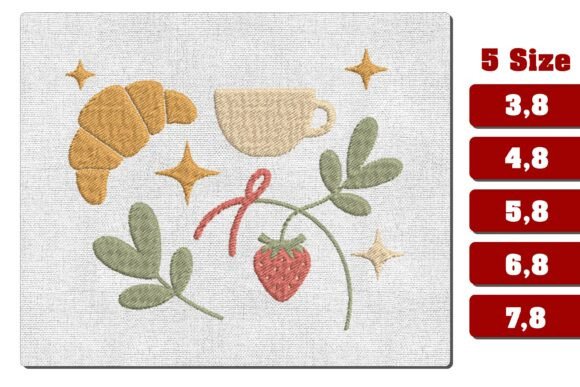
When you first open the Cozy French Bakery Embroidery Design PES, the immediate feeling is one of warmth and approachability. The title suggests a rustic yet elegant aesthetic, perfect for a brand that wants to feel handmade without sacrificing professionalism. In my experience, designs with this specific personality work exceptionally well for bakeries, coffee shops, florists, and artisanal food brands. It strikes a balance between being playful enough for a children's menu or a fun tote bag, but structured enough to appear on a staff uniform or a high-end apron.
The design promises versatility through its available sizes, ranging from 3.8 inches up to 7.8 inches. This scalability is crucial for any business owner planning to use design assets across different mediums. A small logo might look crisp on a cap brim, while a larger version could serve as a statement piece on the back of a chef's coat. The "cozy" descriptor implies soft stitching and perhaps rounded elements that avoid harsh angles, which generally translates to better durability on frequently washed items like kitchen linens.
Real-World Application for Small Business Merch
Let us imagine a scenario where a local café or a handmade shop decides to launch a line of branded merchandise. The Cozy French Bakery Embroidery Design PES becomes the cornerstone of this identity. Unlike printed graphics that can fade or crack after a few washes, an embroidered patch or logo offers tactile depth that customers love to touch.
I have seen this type of design excel in several key areas:
- Embroidered Patches: With the larger sizes (5.8 in to 7.8 in), this design is ideal for creating iron-on or sew-on patches. These can be sold as premium add-ons or used to create limited-edition collections for loyal customers.
- Staff Uniforms: Placing the design on the left chest of a work shirt or the center of a bib apron creates an instant sense of team unity. The size options allow you to scale it down for a subtle accent on a pocket or up for a bold display on the back.
- Tote Bag Design: For crafters and Etsy sellers, a tote bag featuring this motif is a practical giveaway or a sellable item itself. The design fits perfectly within the standard hoop area, making it efficient to produce in batches.
- Cap Embroidery: The smaller variants (3.8 in or 4.8 in) are excellent for front-panel cap designs. However, curved surfaces require careful attention to stitch direction to ensure the "cozy" look remains intact.
Strategic Considerations for Production
While the Cozy French Bakery Embroidery Design PES sounds promising, a professional review must address where caution is required. Not every surface is suitable for every design, and understanding these limitations prevents costly production errors.
One critical factor is stitch density. If the design features intricate outlines or fine details intended for the 7.8-inch version, reducing it to a 3.8-inch patch can cause the threads to merge, creating a muddy appearance. Always test the smallest intended size before mass producing commercial embroidery projects. Additionally, textured fabrics like heavy canvas or bouclé can hide the definition of the design, making it look less sharp than intended.
Color contrast is another vital element. On dark uniforms, a light thread color is essential for visibility. Conversely, if the design relies on white space for its "bakery" feel, it may need to be digitized with a backing layer or a contrasting border when placed on black fabric. You must also consider the washing frequency. Items like aprons and work shirts undergo rigorous laundering; designs with high stitch counts or loose satin stitches may snag or pucker over time unless proper stabilizers are used.
Impact on Brand Identity and Customer Trust
In the world of small business merch, consistency is king. Using a cohesive visual language helps build customer trust and recognition. The Cozy French Bakery Embroidery Design PES contributes to a narrative of quality and care. When a customer sees a neatly stitched logo on a tote bag or a hat, they associate that craftsmanship with the quality of the food or products inside the store.
This level of detail elevates the perceived value of the finished product. A simple printed sticker feels disposable, but an embroidered badge feels like a collectible. This psychological shift can drive engagement and encourage customers to share photos of their merchandise on social media, effectively turning them into brand ambassadors. Furthermore, using high-quality digital embroidery files ensures that your brand looks professional even when produced by third-party decorators.
Essential Designer Notes for Production
Before you commit to a full production run of custom apparel or branded patches, there are several technical steps you must take. As a designer, I always advise my clients to follow this checklist:
- Test in Black and White: Convert the design to grayscale to check the balance of the elements. Does the design hold together when color is removed?
- Review Thread Color Contrast: Ensure the chosen thread colors pop against your target fabric. Dark backgrounds often require lighter, metallic, or specialty threads to make the design stand out.
- Inspect Spacing and Hoop Size: Confirm that the design fits within your machine's maximum hoop size. If the design is 7.8 inches, ensure your machine can handle it without needing to split the file.
- Use Proper Stabilizer: For items like caps or tote bags, the choice of stabilizer (cut-away vs. tear-away) is critical to prevent puckering. Test on scrap fabric first.
- Create a Printable Mockup: Before cutting fabric, generate a printable mockup for client approval. This allows stakeholders to visualize the final result and catch potential issues early.
- Verify Commercial Licensing: Check the license terms included with the Cozy French Bakery Embroidery Design PES. Ensure you have the right to sell products made with this file, especially if you plan to distribute it to other embroiderers.
Finally, remember that not all embroidery machines interpret files identically. What looks perfect on a Brother machine might behave differently on a Tajima. Always run a test sample on the actual fabric you intend to use. If the design includes tiny lettering, verify that it remains legible at the smallest size (3.8 in). Sometimes, simplifying the text or removing unnecessary details improves the overall readability and durability of the custom apparel.
Final Thoughts on the Cozy French Bakery Design
The Cozy French Bakery Embroidery Design PES is a versatile tool for any entrepreneur looking to add a touch of charm to their small business merch. Its range of sizes makes it adaptable for everything from tiny product labels to large wall hangings. By paying attention to fabric texture, stabilizer selection, and thread choices, you can transform this digital asset into a tangible representation of your brand's quality.
Whether you are decorating aprons for a bakery team, creating patches for a boutique, or designing hats for a festival, this design offers a strong foundation for your visual identity. Just remember to test thoroughly, respect the limits of stitch density, and always prioritize the durability of the final product. When done correctly, the result is not just a decoration, but a lasting symbol of your business's commitment to excellence.